Working women are not valued in society, the unequal distribution has had a profound impact on women's empowerment and full participation in society, the speakers said.


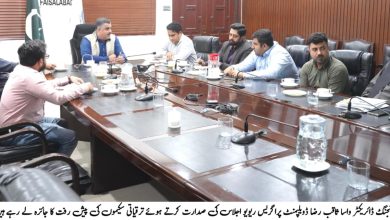
Faisalabad(94 News City Reporter)Care work is seen as women's work which is not valued in society. In Pakistan 90% Women in their homes on average 6 hours spent on unpaid care work, which 180 hours per month, costing 27,693 It is Rs. According to the ILO, the total unpaid care work globally is approx 76% Women do. As a result, this unequal distribution of responsibility for unpaid care and domestic work has had a profound impact on women's empowerment and full participation in society. It is important that unpaid care work is recognized as work and redistributed within the family so that the total amount of unpaid care work is shared more equitably, and some of the cost and responsibility is shifted to the state and the private sector.” These views were expressed by the speakers and participants here in a local hotel in Faisalabad( WISE Women in Struggle for Empowerment)Organized by “Contribution of female domestic workers to the unpaid care economy” At the launch ceremony of a research report titled Government representatives except women domestic workers. The event was attended by academia, labor unions and civil society. Distinguished panelists including Dr. Shehla Tabsum Lead Researcher, Bushra Khaliq Executive Director WISE, Rai Yasin Kharl-Deputy Director Labor and Human Resource Department Punjab, Chaudhry Ehsanul Haque- Director Social Security North Faisalabad, Dr. Imtiaz Maher Education’ Usman Pasha Advocate’ Rab Nawaz Utopisi Staff Federation’ Dr. Amara Atta, Assistant Professor Superior University Faisalabad, Columnist Akhtar Abbas Akhtar, Waheed Khaliq Rame Faisalabad Chamber of Commerce and Parveen Ansari Labor Leader highlighted the important role of women domestic workers. Making recommendations on the economics of unpaid care, she said public awareness programs on the importance of unpaid care and domestic work are the first step in the process of disclosing them, highlighting the economic and social value of unpaid care work. Promote the use of technological devices such as automated machines to streamline household tasks. Similarly, training programs for family members on the importance of shared household care responsibilities are useful. Also, the government should provide resources and organize workshops to educate individuals on practical ways to contribute to household chores and maintenance obligations. Equally important are media campaigns to challenge cultural and religious norms that uphold traditional gender roles. Community support networks can also serve as platforms for sharing experiences, advice and resources. Strengthening communities can reduce the maintenance workload through collective efforts. Speaking on the occasion, Bushra Khaliq, Executive Director of WISE, said that the research conducted by WISE on the topic of care economy is unique and first of its kind, which aims to make a case for recognizing women's care work and their significant contribution to the household economy. It establishes a link between economic poverty, time use, economic value and its distribution in unpaid domestic care work. Four dimensions of housework were focused on: a) Home care, b) Child care, c) Elderly care d) Care of people with special needs. Highlighting the importance of research, he said that this research contributes to efforts to achieve the SDGs. An important goal of the Sustainable Development Goals, especially the SDGs #5.4 says “Recognize and value unpaid care and domestic work through the provision of public, infrastructure, services and social protection policies and the promotion of shared responsibilities”. Chaudhry Ehsanul Haq Director Social Security North Faisalabad said that working women have to do double duty but unfortunately their important role in the national and family economy is not recognized. They for domestic workers 37000 The fresh notification of minimum wages of Rs. is appreciated and the department is committed to its implementation. Speaking on the occasion, Rai Yasin Kharl, Deputy Director of Labor and Human Resource Department Punjab said that till now 30,000 Domestic workers have been registered with some employers' organizations in selected areas. Talking about the hurdles in registration of domestic workers with PESSI, he said business rules and absence of workers welfare fund were causing delays. However, the Punjab government in this regard 50 Has expressed commitment to provide Rs.1 lakh as endowment fund. He said that the mechanism for resolving domestic disputes is absent due to the absence of elected local governments. The Rab Nawaz-PC Staff Federation in Punjab said that positive steps have been taken by the Punjab government including the establishment of a minimum wage board for domestic workers for the first time in Punjab and efforts for endowment funds are in the first phase. He said that the survey of domestic workers in Punjab by the Punjab Bureau of Statistics shows that in Punjab approx 912000 There are domestic workers. We hope that this law will be fully implemented.