
These cleaning hands are also the hands of Pakistan


Tremolo: Mian Nadeem Ahmed 94 news
We pass through clean streets for Eid prayers, we feel satisfied seeing cleanliness around mosques and markets, if the streets are clean, we move on as normal. But have we ever stopped and thought that the hands that cleaned our streets, roads and cities, who is protecting these hands?
Faisalabad's sanitation and sewage systems, especially Faisalabad Waste Management Company and WASA, have a large number of workers performing their duties day and night. Among them are workers who have been working on daily wages or temporary basis for a long time. The question is that a person who has been doing the same type of work for years has become a permanent need for the organization, then when will his future be thought about? For many months they do not get salary, they have to protest and go out on the streets to get their salary.
It is not only a question of job security, but also of human dignity, economic security and equal opportunity.
There have been perceptions and complaints, especially regarding sanitation workers belonging to religious minorities, that they sometimes face reservations in employment and other matters. It is important to clarify here that it is not correct to look at all officers or all institutions from the same point of view. Of course, many officers discharge their duties with integrity and philanthropy, but wherever there is a feeling of injustice to a worker, the management should take notice of it.
Because in the eyes of the Constitution of Pakistan, the value of a citizen is not based on his religion, color or caste, but on his Pakistani status.
Religious minorities including the Christian community in Faisalabad are playing their role in the construction and development of the city. Be it waste management company or WASA, the minority workers working in these institutions are also residents of the same city, citizens of the same country and are contributing to the running of the country and city system with their labor.

When our Eid comes, these workers are busy cleaning the streets, markets and neighborhoods. Be it our festival or someone else's, their duty time is often when everyone else is celebrating with their homes and families.
So the question is quite simple:
Who gives his time and effort to make our happiness clean, shouldn't his life and honor be equally important to us?
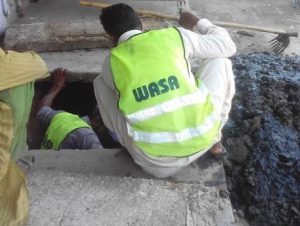
The case of Wasa sewermen is even more sensitive. Landing in sewer lines and drains is not a trivial task. This is directly related to human life and health. There have been incidents in the past in which sewer men lost their lives. However, if a worker falls into a sewer without proper safety equipment, it is not just an employee problem, but a system-wide problem.
A man who descends into the gutter has not only a rope in his hands, but also the hopes of a family behind him.
Safety shoes, gloves, masks, helmets, suitable clothing, gas checking devices and other necessary safety measures are not an added convenience but a basic requirement for a worker. If the work is hazardous, protective equipment should also be mandatory.
Even more alarming is that if a worker refuses to enter the sewers due to lack of safety equipment, he is allegedly threatened with dismissal or action. If this is happening somewhere, this behavior needs immediate attention.
No man should be forced to choose between the fear of employment and the risk of his life.
Similarly, street sweepers are also an integral part of our city. Those working in dust, fumes, heat, cold and traffic should also have adequate protective jackets, gloves, masks, shoes and other necessary equipment. Their protection is not only the responsibility of the institution, but also the hallmark of a civilized society.
The good news is that legislation and initiatives are being taken at the leadership level of the country for the rights, protection and welfare of religious minorities. Be it the Prime Minister of Pakistan or the Chief Minister of Punjab, there are positive announcements and initiatives regarding minorities on various occasions. Assemblies also legislate. All this is certainly commendable.
But the real success will come when the policy made from Islamabad and Lahore reaches the Faisalabad office, field and gutters.
Laws look beautiful in books, but their true spirit is seen when a common worker gets his due, when a sanitation worker is respected, when a sewerman is given safety gear and when a minority employee realizes that he is an equal citizen of the same country.
We have to understand that a sanitation worker is not just a "sanitary worker", he is also a human being. He also has children, parents, wife, siblings, dreams and hopes for the future. His life is as valuable as that of an officer sitting in an office. The only difference is that one person works between the files and the other gets down to the streets, roads and sewers to keep the city moving.
Management of Faisalabad Waste Management Company and WASA should conduct a transparent review of daily wages and long-serving workers' issues. Practical means should be found for the protection and permanence of their employment wherever laws and regulations permit. The concerns of workers belonging to religious minorities should also be heard and there should be an effective and impartial mechanism for redressal of any grievance.
At the same time, the provision of protective equipment to WASA sewermen and waste management field workers should be made a mandatory practical responsibility rather than a paper work. Because development is not just the name of building new roads, bridges and buildings.
The real development is that the person who cleans the road is also safe. Whoever lands in the gutter, he also returns home alive and well. And the minority citizen who is serving Pakistan should also be considered an equal Pakistani.
We clean our homes on Eid, also take care of those hands that clean the city. These hands do not belong to any other country. These are the hands of Pakistan.


