Come to the General Bus Stand in partnership with the Macrific Development Organization and Alternative Research Initiative


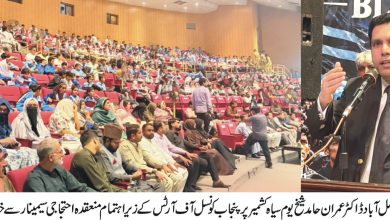
Faisalabad(94 News City Reporter)The Masonry Development Organization has given Alternative Research Initiative (ARI) Organized an awareness meeting with General Bus Stand Driver and Conductor entitled Make Pakistan Tamba Free, on this occasion Rana Habibullah Administrator, Mian Shahbaz Ahmed, Mian Nadeem Ahmed Chairman Faisalabad NGOs Network, City Traffic Police Inspector Hadiya Irfan, MS Ijaz Akhtar Bhatti, Advocate Chaudhry Zulfiqar Ali, Farooq Ayub Chairman Mimar Development Organization, Yusuf Adnan, Rana Asif Arshad, Waqas Liaqat, Waseem Imtiaz, Shamoon Gul, Muhammad Salim, Muhammad Ghayur and others said that smoking cessation should be made the focus of tobacco control policy. Despite decades of anti-smoking campaigns, graphic warnings and tax hikes, Pakistan continues to face widespread tobacco use. At present, more than three million people in the country use tobacco in one form or another, which causes one hundred and sixty thousand deaths in a year. (160,000) More people lose their lives. In Pakistan, efforts to quit smoking are neglected in the tobacco control policy, leaving adult smokers completely helpless to quit the habit. The benefits of quitting smoking are not only limited to public health but also improve one's physical health, financial status and quality of life as it is the most immediate and cost-effective way to reduce the harm caused by tobacco use. Tobacco prevention campaigns prevent people from smoking in the future, but unlike these prevention campaigns, cessation efforts encourage current smokers to kick the habit. Research shows that even small counseling interventions significantly increase smoking cessation rates, but nicotine replacement therapy does not. (Nrt) And pharmaceutical products like varenicline multiply the chances of success. In countries such as the UK, Australia and Thailand, smoking cessation services and facilities are not only made part of the health system, but national helplines to guide smokers, cheap drugs and awareness campaigns make these efforts to quit more effective. Pakistan, on the other hand, has not yet institutionalized smoking cessation efforts as a component of its tobacco control policy. 2004 I have endorsed the World Health Organization's Framework Convention on Tobacco Control, but nevertheless Pakistan has article of this convention. 14 No substantial progress has been made in taking practical steps under Tobacco control strategies have focused more on taxation and packaging than on smoking cessation efforts. Most doctors have no formal training in smoking cessation, and there are no medical centers to help people quit. Most smokers are not aware that it is possible to quit smoking with guidance and support, and that there are support tools available. Pakistan lacks a national smoking cessation helpline, although it is an important and fundamental part of these efforts in most countries. To change this situation, Pakistan needs to adopt a national smoking cessation strategy that is evidence-based and compassionate. There is a need to create a national smoking cessation helpline with trained counselors and services in different languages. A helpline was created in 2017 but is no longer functional. Similarly, smoking cessation efforts should be integrated into the health system. Doctors and nurses should also be trained in this regard. In a country like Pakistan, medicines to help quit smoking should be available at affordable prices. Unless these drugs are affordable and accessible, poor adult smokers will not use them. In the past, tobacco control campaigns were conducted regularly. It is surprising that such a campaign has been planned since social media platforms became a means of instant communication.